

Tactical aircraft programs are moving decisively into full-rate production. With potential follow-on F-16 Block 70/72 purchases and the anticipated approval of full production for the T-7 Red Hawk advanced trainer, we’re seeing a broader shift across the air domain: platforms are transitioning from development and early deliveries into sustained, multi-year manufacturing cycles.
This isn’t just incremental procurement — it reflects confidence in platform maturity, mission-system integration, and supply chain readiness. As production ramps, demand extends well beyond the airframe. Avionics, radar, communications systems, electronic warfare subsystems, and power distribution architectures all scale alongside aircraft output. For suppliers, this marks the beginning of predictable line-fit installations, supported by long-term sustainment and spares demand.
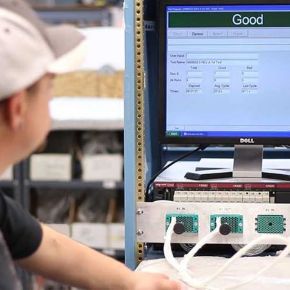
The shift to sustained output changes expectations across the supply base. During development, the focus is qualification and validation. In rate production, the priority becomes repeatable manufacturing, consistent quality, and reliable delivery at volume. In tactical aircraft — where mission performance is tightly tied to onboard electronics — ruggedized interconnect solutions are fundamental to production continuity.
For OEMs and integrators, the challenge is clear: maintain performance and environmental compliance while increasing throughput and managing cost. The move from development quantities to steady-state production is not just a milestone — it is a systems-level integration challenge that touches every connector, cable assembly, and high-speed interface embedded within the aircraft.
What This Means for Your Programs
As fighter and trainer programs stabilize into rate production, engineering and procurement teams must ensure that design integrity translates into scalable manufacturing.
Components selected during development must now perform reliably at higher build rates without compromising performance in demanding flight environments. If you are supporting tactical aircraft avionics, flight controls, radar, or onboard training systems, the implications are immediate. Connectors and harnesses that met qualification during prototype builds must now demonstrate repeatability, manufacturability, and supply chain resilience at scale.
Programs entering sustained production will increasingly rely on partners capable of delivering MIL-spec connectors, high-speed military interconnect, and high-reliability cable assemblies in consistent volumes.
Key realities include:
- Growing demand for MIL-DTL-38999 circular and rectangular connectors supporting avionics, mission computers, and flight control systems.
- Increased integration of high-speed Ethernet, fiber optic interconnect for aerospace, and RF connectors for defense to support radar, communications, and embedded training systems.
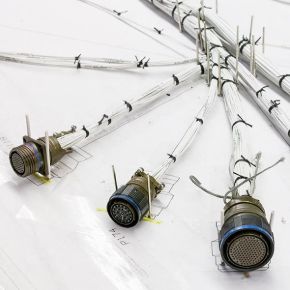
- Scalable cable harness and electromechanical assembly production that transitions efficiently from low-rate initial production to full-rate output.
- Robust EMI/EMP filtering and environmental sealing to ensure survivability under vibration, temperature extremes, and electromagnetic stress.
Beyond electrical performance, teams must now evaluate lead times, process discipline, and configuration control. As aircraft move into larger production lots, standardization becomes essential to avoid redesigns, requalification, or costly delays.
Engineering & Interconnect Considerations
Modern tactical aircraft rely on dense digital backbones and RF-intensive mission systems. As these platforms mature into rate production, interconnect architectures must support expanding data rates, growing fiber networks, and higher RF density — all within strict SWaP constraints.
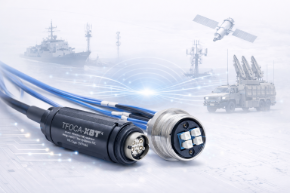
High-speed data has become foundational. Ethernet-based avionics architectures, distributed mission computing, and sensor fusion demand controlled-impedance routing, Quadrax and fiber channels, and strong signal integrity management. These requirements must hold up under high-vibration flight profiles and harsh environmental conditions.
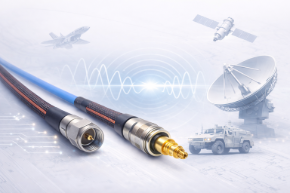
At the same time, RF complexity continues to increase. Advanced radar modes, electronic warfare payloads, and secure communications introduce more high-frequency channels into limited space. This drives demand for compact, phase-stable RF connectors and low-loss cable assemblies capable of operating at higher frequencies without sacrificing EMI resilience.
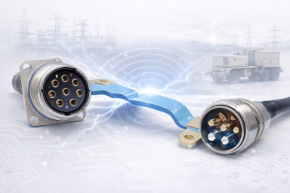
Power distribution is also scaling. As electronic subsystems proliferate, aircraft electrical architectures must accommodate higher loads and more complex distribution schemes. High-current, high-voltage connectors must maintain reliability in challenging thermal and mechanical environments.
EMI/EMP protection remains non-negotiable. Tactical aircraft operate in electromagnetically contested environments, making shielding, filtering, and sealing critical to mission assurance. Even as fiber expands to replace some copper pathways, critical power and RF circuits must remain protected.
In rate production, all of these factors — signal integrity, RF performance, SWaP optimization, qualification rigor, and manufacturing scalability — must work together within a tightly controlled configuration baseline.
Supporting Capabilities Across Amphenol Military & Aerospace
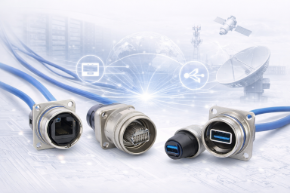
Programs facing these requirements often evaluate rugged MIL-spec circular connectors, high-speed Ethernet and fiber interconnect systems, RF cable assemblies, and advanced PCB backplanes as part of an integrated architecture strategy.
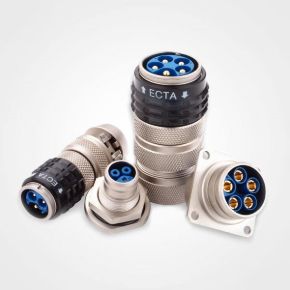
Amphenol Aerospace supports tactical aircraft programs with QPL MIL-DTL-38999 connectors, high-speed Quadrax and Ethernet solutions, fiber optic connectors, high-power interfaces, and EMI/EMP filter and hermetic technologies aligned with jet aircraft avionics and power distribution systems.
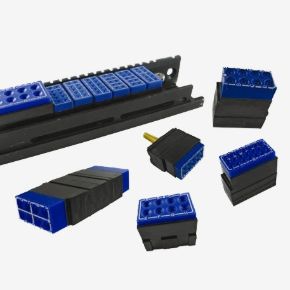
For high-speed military interconnect within mission systems and onboard networks, Amphenol Military High Speed provides embedded high-speed contacts, custom copper and fiber cable assemblies, and signal integrity engineering for Ethernet and VPX-based architectures.
As RF density increases, SV Microwave and Amphenol CDI contribute high-frequency RF connectors up to 65 GHz, phase-stable low-loss cable assemblies, and custom RF solutions with filtering options tailored to radar and electronic warfare systems.
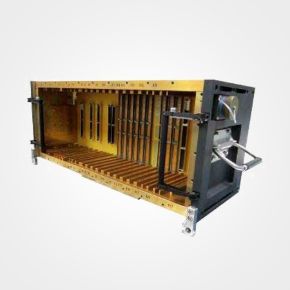
Complementing these interconnect technologies, Amphenol Printed Circuits supports high-layer-count, controlled-impedance PCBs and large-format backplane assemblies used in mission-critical embedded computing and radar processing.
Together, these capabilities align with the needs of tactical aircraft programs transitioning into sustained rate production — where reliability, scalability, and disciplined qualification are as important as raw performance.
Sources
- Slovakia in talks with US to buy four more F-16s – https://www.defensenews.com/global/europe/2026/02/16/slovakia-in-talks-with-us-to-buy-four-more-f-16s/ (2026-02-16)
- EXCLUSIVE: Air Force to approve T-7 trainer production within days – https://breakingdefense.com/2026/02/exclusive-air-force-to-approve-t-7-trainer-production-within-days/ (2026-02-20)